


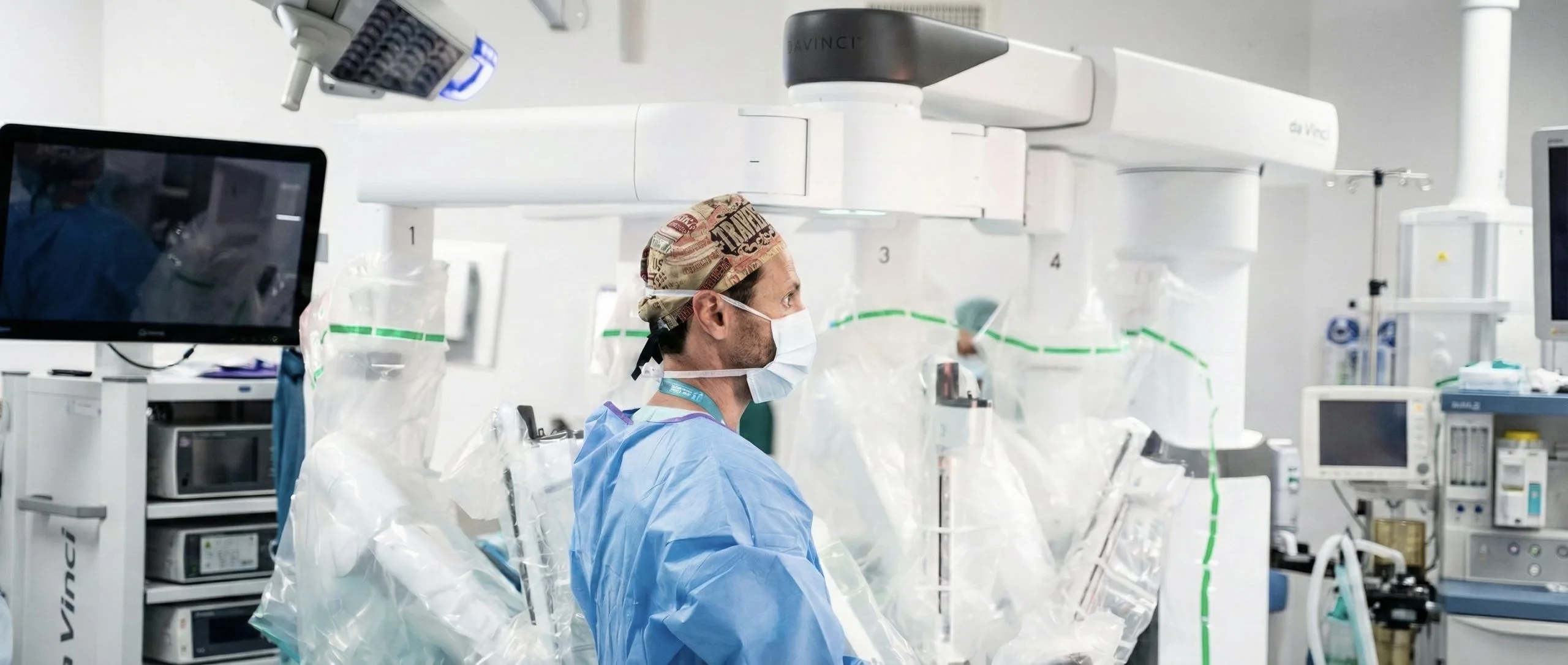
Brief Introduction:If you have been diagnosed with an upper tract urothelial carcinoma (UTUC) and surgery has been recommended to remove the affected kidney and ureter, Robot-Assisted Radical Nephroureterectomy (RARNU) is one of the most advanced treatment options available. This minimally invasive procedure aims to cure the cancer through the complete removal of the affected organs, using the precision of robotic technology to optimize results and facilitate your recovery. This page aims to provide clear and detailed information about RARNU so that you can better understand this treatment and discuss your options with your urologist.
If you have been diagnosed with an upper tract urothelial carcinoma (UTUC) and surgery has been recommended to remove the affected kidney and ureter, Robot-Assisted Radical Nephroureterectomy (RARNU) is one of the most advanced treatment options available. This minimally invasive procedure aims to cure the cancer through the complete removal of the affected organs, using the precision of robotic technology to optimize results and facilitate your recovery. This page aims to provide clear and detailed information about RARNU so that you can better understand this treatment and discuss your options with your urologist.
1. What is the Upper Urinary Tract, the Urothelium, and Upper Tract Urothelial Carcinoma (UTUC)? (A Brief Review)
The Upper Urinary Tract: It consists of the renal pelves (the central part of each kidney that collects urine) and the ureters (the thin, muscular tubes that transport urine from each kidney to the bladder).
The Urothelium: It is the specialized lining tissue that covers the interior of the entire urinary tract, from the renal pelves, through the ureters, bladder, and part of the urethra.
Upper Tract Urothelial Carcinoma (UTUC): It is a type of cancer that originates in the urothelial cells lining the renal pelvis or the ureter. It is histologically similar to bladder cancer but occurs in a less common location. RARNU is a primary treatment for localized or locally advanced UTUC.
2. What is Radical Nephroureterectomy (RNU)?
Definition: Radical Nephroureterectomy (RNU) is an extensive surgical procedure involving the complete removal of the kidney on the affected side, the entire corresponding ureter (from the kidney to its entry into the bladder), and a small portion of the bladder (known as the “bladder cuff”) where the ureter inserts.
Main Objective: The primary goal of RNU is the complete removal of the upper tract urothelial cancer, including the entire pathway where cancer cells could potentially spread or recur. The removal of regional lymph nodes (lymphadenectomy) may also be performed for disease staging and, in some cases, for therapeutic purposes.
Indications: RNU is the standard and potentially curative treatment for most cases of invasive or high-grade UTUC. The decision to perform an RNU depends on several factors, including the stage (extent) and grade (aggressiveness) of the tumor, its exact location (renal pelvis or ureter), the function of the contralateral kidney (the kidney on the other side), and the patient’s overall health status.
3. What is the Robotic Approach (Robot-Assisted Radical Nephroureterectomy - RARNU)?
RNU can be performed via traditional open surgery, conventional laparoscopy, or, more advanced and less invasive, via the robotic route (RARNU), frequently using the Da Vinci® surgical system.
How Robotic Surgery (RARNU) Works:
- It is a minimally invasive technique performed under general anesthesia.
- The surgeon makes several small incisions (usually 4 to 6) in the patient’s abdomen or flank.
- Through these incisions (“ports”), small tubes are inserted to allow the passage of a high-definition 3D camera and miniaturized, articulated surgical instruments.
- The surgeon operates from an ergonomic console in the operating room, with a magnified and detailed three-dimensional (3D) view of the surgical field.
- The surgeon controls the robotic arms holding the instruments. Their hand movements at the console are translated in real-time into precise, filtered, and intuitive movements of the instruments inside the patient’s body.
Differences and Advantages over Other Approaches for RNU:
- Open Surgery: Traditionally, open RNU requires one or two large incisions—one in the flank to access the kidney and upper ureter, and another in the lower abdomen to access the distal ureter and bladder. This results in significant surgical trauma.
- Conventional Laparoscopy: Uses small incisions, but the surgeon operates with long, rigid instruments while looking at a 2D monitor. The excision of the bladder cuff and the suturing of the bladder can be particularly challenging with conventional laparoscopy.
- Robotic Surgery (RARNU): Combines the benefits of a minimally invasive approach with cutting-edge technology. The robotic platform facilitates all stages of RNU, from kidney removal (nephrectomy) and dissection of the entire ureter (total ureterectomy) to the precise excision of the bladder cuff and subsequent bladder suturing. Performing a lymphadenectomy, if indicated, is also facilitated.
4. Advantages of Robot-Assisted Radical Nephroureterectomy (RARNU)
Robotic technology offers significant advantages for performing RNU:
Magnified 3D High-Definition Vision: Allows exceptional visualization of the entire operative field, from the kidney and its vessels to the bladder, facilitating precise and safe dissection.
Greater Precision, Dexterity, and Range of Motion: Articulated robotic instruments (“EndoWrist®”) allow the surgeon to perform fine and complex movements in confined spaces, which is crucial for dissecting the ureter along its entire path and manipulating the bladder.
Ease and Precision in Bladder Cuff Excision and Bladder Suturing: Excising the portion of the bladder where the ureter enters (bladder cuff) is a critical step to prevent tumor recurrence in the bladder. Robotic technology makes this step more precise and facilitates watertight bladder suturing.
Potential for More Precise and Extensive Lymphadenectomy: If regional lymph nodes need to be removed, robotic vision and instrumentation can allow for a more complete and meticulous removal.
Less Blood Loss During Surgery: And, consequently, a lower need for blood transfusions.
Less Post-operative Pain: Due to smaller incisions and less overall surgical trauma.
Shorter Hospital Stay: Compared to open surgery.
Faster Recovery and Earlier Return to Normal Activities and Work.
Better Aesthetic Results: Scars are significantly smaller and more discreet.
Oncological Results: Studies show that RARNU, when performed by experienced surgeons, offers cancer control results comparable to traditional open surgery.
5. Who is a Candidate for RARNU?
RARNU is an option for patients diagnosed with Upper Tract Urothelial Carcinoma (UTUC) who have an indication for a radical nephroureterectomy. This generally includes:
Patients with tumors located in the renal pelvis or any segment of the ureter.
Tumors that are invasive or high-grade.
It is essential that the contralateral kidney (the kidney on the other side) is healthy and has adequate function to sustain blood filtration after the diseased kidney is removed.
Patients in adequate physical condition to tolerate general anesthesia and the surgical position (which may be side-lying or on the back with some tilt, depending on the technique).
The final decision on whether RARNU is the best option for you will always be made after a detailed evaluation and multidisciplinary discussion (urologist, oncologist, radiologist) and with you, considering all the characteristics of your tumor, your overall health, and your preferences.
6. Preparation for Surgery
Preparation for a RARNU is similar to other major robotic surgeries:
Pre-anesthesia consultation.
Pre-operative exams: blood tests, ECG, etc.
Medication adjustment: suspending anticoagulants or antiplatelet agents as directed.
Fasting: according to instructions.
Bowel preparation: may be recommended in some cases.
General information: about hospitalization and what to expect.
7. The Surgical Procedure (Simplified Description for the Patient)
General anesthesia.
Surgical positioning.
Creation of ports: small incisions for the robotic instruments and camera. Insufflation of the abdomen with CO2.
Robotic docking.
Main Surgical Steps (performed by the surgeon at the console):
- Nephrectomy: The kidney is carefully dissected from surrounding tissues. The renal blood vessels (artery and vein) are identified, ligated (with clips or sutures), and cut.
- Ureterectomy: The ureter is dissected along its entire length, from its exit from the kidney (renal pelvis) to its arrival at the bladder. It is important to remove the entire ureter to prevent tumor recurrence.
- Bladder Cuff Resection: The portion of the bladder where the ureter inserts is carefully excised, ensuring complete removal of the ureter’s termination. This is a crucial part of the surgery to prevent tumor recurrence in the bladder.
- Bladder Closure: The resulting opening in the bladder is closed (sutured) in a watertight manner.
Lymphadenectomy (if indicated): Removal of lymph nodes located near the kidney and major vessels for disease staging. - Removal of the Surgical Specimen: The kidney, ureter, and bladder cuff (and nodes, if removed) are placed in a special extraction bag and removed through one of the incisions, which may be slightly enlarged for this purpose.
Finalization: An abdominal drain is usually placed near the surgical area and a bladder catheter (urinary catheter) in the urethra. The small incisions are closed.
Pathological Analysis: The entire surgical specimen is sent to a pathology laboratory for detailed microscopic analysis. The results (tumor type, grade, stage, surgical margins, lymph node involvement) are fundamental for the prognosis and for deciding on the need for additional treatments.
8. Post-operative and Recovery
Hospital Stay: Generally lasts a few days (typically 3 to 5 days, but may vary).
Pain Control: Pain is usually well-controlled with analgesics.
Bladder Catheter: You will remain with a catheter in the urethra to drain urine from the bladder and allow the bladder suture to heal properly. The catheter is usually kept for 7 to 14 days.
Abdominal Drain: If placed, it is generally removed before discharge or in the first days at home when drainage decreases.
Early Mobilization: You will be encouraged to get up and walk as soon as possible after surgery to help prevent complications like venous thrombosis or pulmonary problems.
Diet: Feeding is restarted progressively.
Hospital Discharge: With detailed instructions on medication, wound care, allowed physical activity (avoiding intense efforts for several weeks), and when and how the bladder catheter will be removed.
Recovery at Home: Complete recovery can take several weeks. It is normal to feel some fatigue. Physical activity should be increased gradually. It is crucial to maintain good hydration and follow all medical recommendations.
Renal Function: Overall renal function will depend on the health and compensatory capacity of the contralateral kidney (the remaining kidney). This will be monitored regularly.
9. Expected Results and Potential Side Effects/Complications
Oncological Control: The primary goal of RARNU is to cure the cancer. Success rates depend on the stage and grade of the tumor at the time of surgery.
Renal Function: After RARNU, you will live with only one kidney. In most cases, if the remaining kidney is healthy, it will compensate adequately and maintain sufficient overall renal function.
Potential Side Effects and Complications: Like any major surgery, RARNU has risks. The robotic approach aims to minimize them.
- General Surgical Risks: Bleeding (hemorrhage, rarely requiring transfusion), infection (wound, urinary, intra-abdominal), deep vein thrombosis (DVT) or pulmonary embolism (PE), injury to adjacent organs (such as bowel, spleen, pancreas, major vessels—very rare with experienced surgeons), port-site hernia.
- Specific RARNU Risks:
- Urinary Fistula (Bladder Leak): Can occur if the bladder suture does not heal perfectly. Usually resolves with keeping the bladder catheter for a longer period or, rarely, with a reintervention.
- Bladder or Urethral Stenosis (Narrowing):Very rare.
- Tumor Recurrence: UTUC has a risk of recurrence, which can occur in the bladder, in the surgical area (rare if surgery is complete), in the contralateral urinary tract, or at distant sites (metastases). The risk depends on the stage and grade of the original tumor. The bladder cuff removal is specifically to minimize the risk of recurrence in the bladder.
- Lymphocele:Accumulation of lymphatic fluid in the area where the nodes were removed (if lymphadenectomy was performed). May require drainage.
It is essential to discuss all these potential risks and benefits openly with your urologist.
10. Medical Follow-up After RARNU
Follow-up after RARNU is crucial and lifelong due to the risk of recurrence, especially in the bladder. The surveillance plan is individualized and includes:
Regular consultations with the urologist.
Bladder Surveillance: Cystoscopies (endoscopic bladder examination) and urinary cytologies (analysis of cells in urine) are performed at regular intervals (e.g., every 3-6 months for the first years, then at longer intervals), as there is a significant risk of developing new urothelial tumors in the bladder after a UTUC.
Periodic Imaging Exams (Uro-CT or Uro-MRI): To monitor the remaining kidney, the area where surgery was performed, and to detect early local recurrences or distant metastases.
Renal Function Monitoring: With regular blood tests.
11. My Experience with Robot-Assisted Radical Nephroureterectomy (RARNU)
Robot-Assisted Radical Nephroureterectomy (RARNU) is, in my practice, the surgical approach of choice for treating upper tract urothelial cancer that requires removal of the kidney and the entire ureter. This minimally invasive technique allows me to perform this complex and delicate oncological procedure with a level of precision and visualization that I consider superior. The robotic platform is particularly advantageous in the meticulous dissection of the kidney and ureter throughout its entire path, from the lumbar region to the deep pelvis, and, crucially, in the precise excision of the bladder cuff and subsequent bladder suturing—a fundamental step to minimize the risk of local tumor recurrence. Furthermore, if a lymphadenectomy (removal of lymph nodes) is indicated, it can be performed more rigorously and extensively with the aid of the robot. My primary goal with RARNU is to achieve the best possible oncological results for the patient while minimizing surgical trauma, accelerating recovery, and preserving quality of life after such a significant surgery.
12. Final Message
Robot-Assisted Radical Nephroureterectomy (RARNU) is an advanced and effective surgical treatment for upper tract urothelial cancer. The use of robotic technology offers significant advantages in terms of precision, lower invasiveness, and patient recovery, maintaining the fundamental principles of oncological treatment. If you have been diagnosed with upper tract urothelial cancer and radical nephroureterectomy was recommended as treatment, the robotic approach (RARNU) is, in many cases, the best surgical option available today. It is a major decision that should be made after a detailed discussion with your urologist. I invite you to schedule a consultation so that we can discuss your specific case in depth, the potential benefits and risks of this procedure, and clarify all your doubts, thus making an informed and confident decision about your treatment.