


HIGHLIGHTS:
- Incisionless Procedure: RIRS is a minimally invasive technique performed entirely through the natural urinary tract, eliminating the need for any skin incisions or cuts.
- High Success Rate: Utilizing modern LASER technology, the procedure fragments or pulverizes stones, ensuring high efficacy in the elimination of kidney stones.
- Access to Hard-to-Reach Areas: Thanks to the device's flexibility (flexible ureterorenoscope), it is possible to reach and treat stones in areas of the kidney that are difficult to access with other techniques.
- Rapid Recovery: Hospital stay is short, often performed as an outpatient procedure (same-day discharge), allowing patients to return to their normal activities within a few days.
- Versatility and Safety: It is a safe and effective option for various patient profiles, including those with multiple stones, obesity, or those taking anticoagulant medication.
Modern Endoscopic Treatment for Kidney StonesBrief Introduction:
If you have been diagnosed with a kidney stone (“pedra”) in the kidney, your urologist may have mentioned RIRS (Retrograde Intrarenal Surgery) as a treatment option. RIRS is a minimally invasive and highly effective procedure performed through the natural urinary tract, without the need for skin incisions (cuts), to treat stones located inside the kidney. This page aims to clearly explain what RIRS is, when it is used, how it is performed, its benefits, and what to expect during recovery, so you can make an informed decision about your treatment.
Brief Introduction:
If you have been diagnosed with a kidney stone (“pedra”) in the kidney, your urologist may have mentioned RIRS (Retrograde Intrarenal Surgery) as a treatment option. RIRS is a minimally invasive and highly effective procedure performed through the natural urinary tract, without the need for skin incisions (cuts), to treat stones located inside the kidney. This page aims to clearly explain what RIRS is, when it is used, how it is performed, its benefits, and what to expect during recovery, so you can make an informed decision about your treatment.
1. What are Kidneys and Kidney Stones? (A Brief Review)
The Kidneys:These organs are responsible for filtering the blood, removing waste and excess fluids to produce urine.
Kidney Stones (Urinary Lithiasis): These are hard, stone-like deposits that form in the kidneys when urine contains a high concentration of crystal-forming substances (such as calcium, oxalate, uric acid) and/or a deficiency of substances that inhibit their formation. These stones can vary in size and composition and can cause intense pain (renal colic), urinary tract infections, blood in the urine, or blockage of urinary flow.
2. What is RIRS (Retrograde Intrarenal Surgery)?
Definition: RIRS stands for Retrograde Intrarenal Surgery. It is an endoscopic procedure that allows the urological surgeon to access the interior of the kidney (renal pelvis and calyces, where stones form and lodge) by following the natural path of urine, but in the reverse (retrograde) direction.
Main Instrument: Flexible Ureterorenoscope:
- Description: The key instrument for RIRS is a flexible ureterorenoscope. It is a very thin tube (a few millimeters in diameter), long and highly flexible, which features a high-definition video micro-camera at its tip, a light source, and one or more internal working channels.
- Navigation Capability: Its extreme flexibility and the ability to articulate the tip allow the surgeon to navigate precisely through the natural curves of the urethra, bladder, and ureter to reach practically all cavities (calyces) inside the kidney.
- How it Works (General Principle): The flexible ureterorenoscope is carefully introduced through the urethra (the urinary canal), passes through the bladder, and goes up the ureter (the tube connecting the kidney to the bladder) until it reaches the interior of the kidney where the stone (or stones) is located. Once the stone is directly visualized through the camera, very thin instruments can be introduced through the working channels of the ureteroscope to treat it (usually fragmenting it with LASER).
Differentiation from Other Stone Procedures:
- SWL (Extracorporeal Shock Wave Lithotripsy): Uses shock waves generated outside the body to fragment stones.
- PCNL (Percutaneous Nephrolithotomy): Requires a small skin incision in the lumbar region to create direct access to the kidney.
- RIRS is distinguished by being an intraluminal endoscopic procedure and completely “cut-free” externally.
3. When is RIRS Indicated? (Main Indications)
RIRS is a versatile technique and is frequently recommended for:
Treatment of Kidney Stones (Renal Lithiasis):
- Moderate-sized stones located in the kidney (usually up to about 2 cm in diameter, although larger stones may be addressed in specific situations or by planning multiple procedures).
- Stones located in any part of the kidney’s collecting system, including the lower calyces, which are sometimes difficult to access with other techniques like SWL.
- Cases where previous SWL (shock waves) treatment failed.
- Situations where SWL is contraindicated or less effective, such as in patients with obesity, certain anatomical abnormalities of the urinary tract, or patients taking anticoagulant medication that cannot be safely suspended.
- Stones considered “hard” (e.g., some types of calcium oxalate monohydrate, cystine), which are less likely to fragment with shock waves.
- Patients with multiple small stones or residual fragments after a previous treatment.
Diagnosis and Treatment of Other Upper Urinary Tract Conditions (Less Common):
- Diagnosis (via direct visualization and biopsy) and treatment (with LASER ablation) of small, low-grade upper urothelial tumors in very selected cases.
- Evaluation of hematuria (blood in the urine) where the source is suspected to be in the upper urinary tract.
- Treatment of benign strictures (narrowings) within the renal collecting system or in the proximal ureter.
4. Advantages of RIRS
Minimally Invasive: Performed entirely through natural pathways, without skin incisions.
High Success Rate (“Stone-Free Rate”): Especially with the use of modern LASER technology to pulverize stones.
Access to Challenging Locations: The maneuverability of the scope allows reaching stones in the lower calyces.
Low Risk of Serious Complications: Especially when performed by experienced urologists.
Short Hospital Stay: Often performed as an outpatient procedure or with only one night of hospitalization.
Fast Recovery: Most patients resume normal activities within a few days.
Multiple Stones: Ability to treat several stones in a single session.
Safety: Generally safe for obese patients or those on managed anticoagulation.
5. Preparation for RIRS
Pre-Anesthesia Consultation: Evaluation for general anesthesia.
Pre-Operative Exams: Blood tests (CBC, coagulation, renal function), urine analysis (to exclude infection), and recent imaging (usually a CT scan).
Medication Adjustment: Anticoagulants or antiplatelet agents may need to be adjusted or suspended under medical guidance.
Fasting: Required for several hours before surgery.
Prior Stent Placement (Optional): In some cases, a ureteral stent (Double-J catheter) may be placed weeks before RIRS to passively dilate the ureter for easier access.
6. The RIRS Procedure (Simplified Description)
Anesthesia: Performed under general anesthesia.
Positioning: Lying on the back with legs elevated and supported (lithotomy position).
Access: The urologist introduces the scope through the urethra and bladder, ascending the ureter to the kidney. A ureteral access sheath (a protective tube) and a safety guide wire are often used.
Treatment: The stone is visualized on a 3D/HD monitor. A thin LASER fiber (Holmium or Thulium) fragments the stone.
- Fragmentation: Breaking it into pieces for active removal.
- Dusting (Pulverization): Turning the stone into fine “dust” for spontaneous elimination.
Removal: If needed, a small endoscopic “basket” is used to extract fragments.
Finalization: A temporary ureteral stent (Double-J catheter) is usually placed to ensure drainage, relieve pain, and facilitate healing.
7. Post-Operative and Recovery
Internship: Discharge is typically on the same day or the following morning.
Pain Control: Flank or bladder discomfort is common but manageable with standard analgesics.
Double-J Stent: Stays in place for 1 to 2 weeks. It may cause irritative symptoms like increased frequency, urgency, or mild blood in the urine (hematuria). These symptoms disappear once the stent is removed.
Stent Removal: A quick outpatient procedure involving a cystoscopy with local anesthesia.
Recovery at Home: Drink plenty of fluids (at least 2 liters of water daily) to flush out fragments. Most people return to work and light exercise within a few days.
Stone Analysis: Recovered fragments are analyzed to guide a prevention plan.
8. Expected Results and Potential Side Effects
Results: Highly effective for complete elimination of moderate stones.
Potential Risks (Rare): Urinary infection (UTI), mild hematuria, flank pain, or (very rarely) ureteral injury or sepsis. Small residual fragments may occasionally remain, requiring monitoring.
9. Medical Follow-up
Follow-up includes a consultation to remove the stent, control imaging (Ultrasound or low-dose CT) to confirm the stone-free status, and a discussion of results to implement a prevention plan (dietary changes or medication).
10. A Note on RIRS and Robotic Surgery
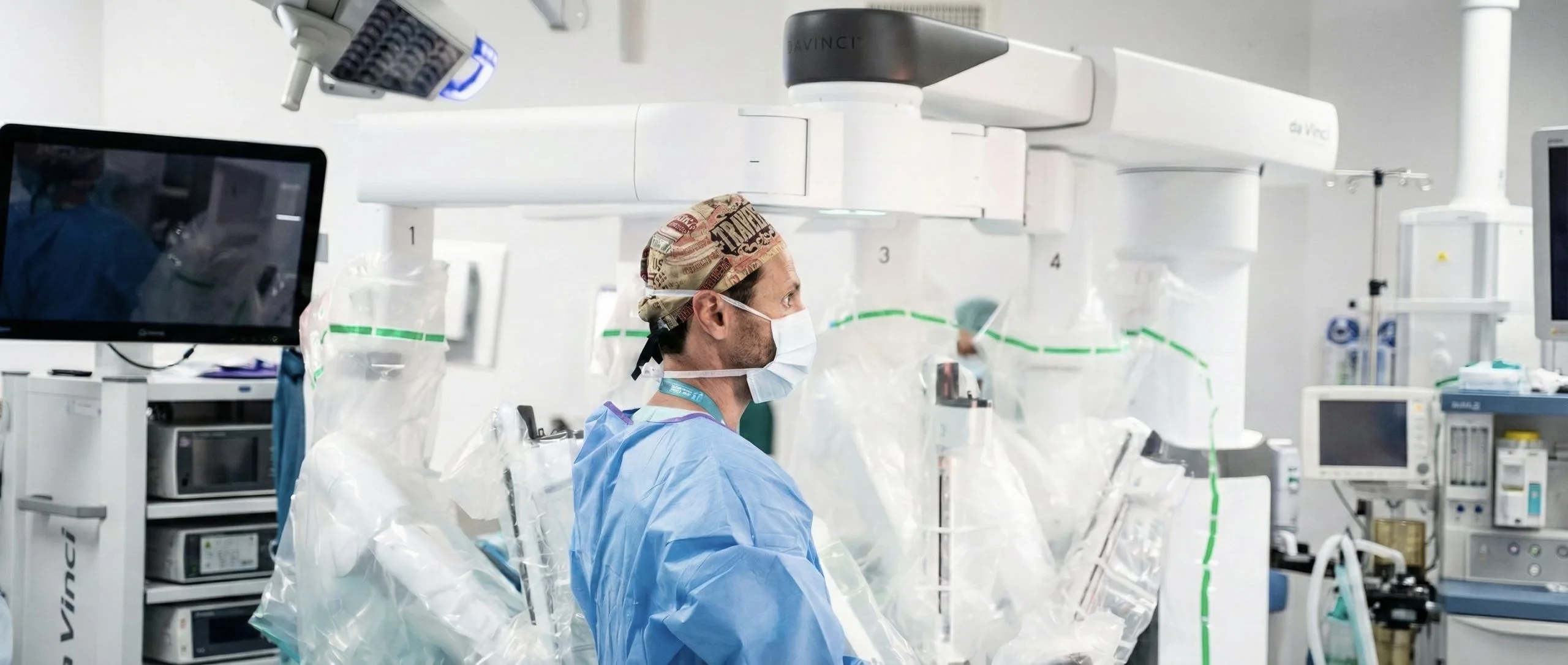
It is important to clarify that RIRS is a highly specialized endoscopic procedure, not a robotic surgery. However, as a urologist dedicated to minimally invasive care, my experience with advanced technologies—including robotic surgery for complex pathologies—complements my ability to perform RIRS with maximum precision and safety. My goal is always to select the best, least invasive technique for each patient.
11. Final Message
RIRS is a modern, safe, and effective solution for kidney stones, offering a fast recovery without incisions. If you have been diagnosed with stones, RIRS may be an excellent choice. I invite you to schedule a consultation to define the best treatment plan for your health.